Overview: This comprehensive home safety and babyproofing guide details practical, evidence-based strategies for parents to protect young children, including installing furniture edge guards, cabinet and drawer locks, stair safety gates, and garage door automation.
Your home is your child’s whole world from infancy through the preschool years. Your child will try to explore every inch of it at different developmental stages. As a first-time parent, it’s normal for you to fear pediatric injuries. These tips can help you make your home a much safer place for young children.
Cover Sharp Surfaces With Edge Guards
Falls can happen before you expect them. Babies begin to roll, crawl, stand, and walk before they develop balance, coordination, or awareness of their surroundings. Among children aged 1 year and younger, falls are the leading cause of injury-related hospitalization. Edge guards and corner protectors cushion sharp surfaces, preventing injuries.
By cushioning the impact, these covers reduce the risk of contusions and lacerations. Transparent products are a popular choice because they blend discreetly into surfaces. However, they’re still strong enough to ensure your baby can’t easily remove them.
Consider sticking edge guards to angular furniture too. Cover the top and sides of end and coffee tables, TV stands, low cabinets, and un-upholstered chairs sitting at the eye, head, or face level of your children.
Childproof Cabinet and Drawer Locks
In 2023, emergency departments treated approximately 67,000 cases of pediatric poisoning injury involving children under 5. Mobile infants and toddlers often put things in their mouths to explore their environment. They’re too young to recognize what’s edible and what’s harmful.
Cabinets and drawers provide ample storage to keep your space clutter-free and keep hazardous items, such as medications, cleaning supplies, and coin batteries, out of reach. Decluttering rooms to hide choking hazards and poisonous substances from your child is one thing, but locking them away is another. Kids learn how to open cabinets and drawers by watching adults.
Babyproofing storage units with magnetic and strap locks is important. These devices can offset a child’s exploratory drive, as a toddler still lacks the dexterity and logical problem-solving skills to undo them.
Install Safety Gates to Prevent Stair Falls
According to data gathered by the National Electronic Injury Surveillance System from 2012 to 2016, stairs and steps accounted for 9.8% of specified fall cases in children under 5.
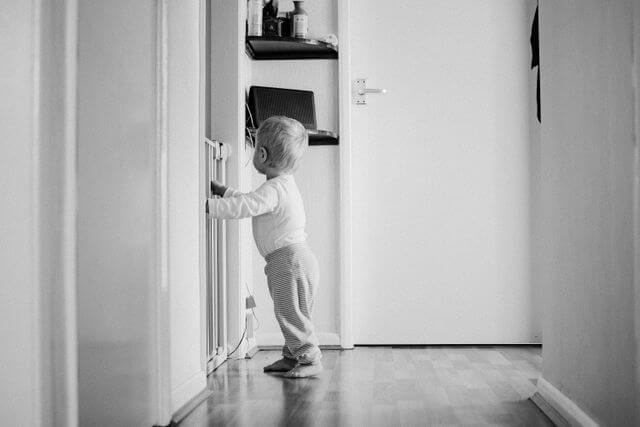
Little ones are prone to falling due to developmental reasons, such as disproportionate body parts and unrefined motor skills. Physical development should improve their sensory and depth perception over time. Until your child grows enough to gauge stair treads, edges, and drop-offs, gate your staircase on both ends to restrict their access, supervised or not.
A hardware-mounted gate is a must at the top of the stairs to prevent it from yielding under pressure. It should swing out onto the landing, not inward into the stairs. Look for a design without a threshold to avoid a tripping hazard. In contrast, a quality pressure-mounted gate at the bottom of the stairs and banister adapters let you secure it without drilling a hole. Auto-close and double-locking mechanisms increase safety.
Add a Garage Door Opener
The United States Consumer Product Safety Commission says that garage doors cause about 30,000 injuries yearly, and many of the victims are children. Retrofitting your system with an opener eliminates the need to operate it manually.
A garage door opener supports automation and remote access. Safety sensors automatically stop the door from moving and trigger the reversing mechanism, which prompts the door to open when an obstruction is detected. Rolling-code technology prevents unauthorized access.
This feature helps keep your family out of harm’s way, but keep a few safety precautions in mind. Don’t let your kid touch the remote control, even under supervision, so they won’t see it as a toy. Also, conduct a monthly visual inspection to spot signs of damage, such as rusty springs, and lubricate moving parts regularly. If you use your garage for storage, securely close all cupboards containing hazardous chemicals and keep a dedicated container for toys to distract your child from exploring the rest of the space.
Making Your Baby’s Little World Safer
While some people are concerned that babyproofing the whole house will be overwhelming, it can actually be reassuring. Worrying about your child’s safety is part of being a parent. Fortunately, improving your home can help you sleep tight at night.
ABOUT THE AUTHOR
Dan Parks is a senior writer at Modded with over six years of experience creating evidence-based content on parenting and lifestyle. His work focuses on family life, child development, and internet safety. As a dedicated father, Dan brings a personal perspective to his writing. He specializes in modern parenting strategies designed to positively impact the youngest generations. Ultimately, his goal is to give new parents helpful information to raise the future.
RELATED ARTICLES
- Baby Proofing Your Home
- Babyproofing Beyond the Basics: Hidden Risks Every New Parent Should Know
- Infant Car Seat Safety Guide for Parents
- Car Seat Safety Basics: Keeping Your Child Safe on the Road
Cover photo by Lisa Fotios