Varicose Veins During and After Pregnancy: Here’s what to look for, plus causes and treatment options.
While pregnancy brings about many beautiful changes, it also puts immense stress on the body, often resulting in permanent changes. While women’s bodies are often able to heal after six months to a year after childbirth, there are a few issues that may not fully go away, and that should be watched out for.
One of these issues is varicose veins during pregnancy, and the associated pains and potential dangers that come along with it. While many visible veins brought on by pregnancy will disappear in time, it’s the still-visible veins in your legs that may be cause for worry. This could lead to vein disease or even deep vein thrombosis, which could potentially be life-threatening.
Typically, your veins send blood in just one direction. But when these one-way valves come under extra pressure or strain, which is exactly what happens in your legs during pregnancy, the valves can become damaged and swollen. This causes the blood to start flowing in both directions, essentially leaking backwards. In turn, you’ll see bulging veins and may feel aching legs or pain in your thighs and calves.
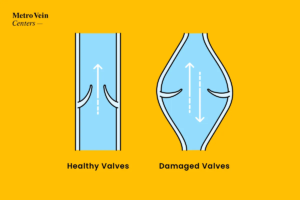
While smaller, painless spider veins during pregnancy aren’t uncommon, they hold a lot less risk than the larger, noticeable varicose veins. Should these bulging, green-blue veins swell and cause pain, you’ll want to consult with one of our Metro Vein Centers vein specialists.
Several factors increase your likelihood of developing varicose veins during pregnancy.
- Prior Births: If you’ve already given birth and had varicose veins during pregnancy before, you’re likely to develop them again while pregnant with your second or third child
- Genetics: A history of varicose veins in your family—especially during pregnancy—may mean you’ll suffer from postpartum vein issues as well
- Above-Average Weight Gain: If you gained much more than 40 pounds while pregnant, that sudden extra weight may have put extra pressure on your legs, hindering proper blood flow
Increased strain and weight within your body can cause pressure on the veins in the lower abdomen and pelvic floor. The resulting blood pressure shifts can result in varicose veins forming, and if these persist, they could lead to serious issues throughout your legs and body.
Sclerotherapy as an option for long-term prevention
Sclerotherapy for venous insufficiency is a minimally invasive treatment option that treats superficial veins that are unhealthy via a small injection and no incisions. It is very effective at treating the bulging veins that lead to common symptoms of heaviness, aching, cramping, and swelling. This decreases the risk of blood clotting in the future and allows for improved circulation in your legs.
Exercises or postures like elevating the legs, walking, or foods for vein health (that are compatible with pregnancy) that could help prevent the development of varicose veins
Movement is the best medicine, especially in pregnancy. We get significant shifts in blood volume in pregnancy to support babies, and we want to keep an active lifestyle to aid circulation as well as to help decrease swelling. Elevating your legs at rest, staying well hydrated, and avoiding prolonged sitting or standing will help support vein health in pregnancy and decrease long-term complications from varicose veins.
Genetics & varicose veins
Knowing your genetic history is a very important first step in the prevention of varicose veins. Maintaining a healthy weight, blood pressure, and staying active will prevent further progression of the underlying genetic risk. Sometimes, despite all of our conservative measures, the veins still fail, but having all of these things well controlled will lead to better treatment outcomes if indicated and overall decreased long-term risk.
While we don’t recommend any procedures while pregnant, all of our treatment options have been approved for use before and following pregnancy. As soon as a month after you’ve given birth, our Metro Vein Centers specialists will do a pain-free vein analysis on your legs to determine the best course of action (if any!). If you still have visible or painful varicose veins in your legs six months post-pregnancy, you should schedule a consultation with one of our vein clinics.
At your appointment, our vein specialists may determine that you just need a specialized diet and exercise. If they discover specific areas needing treatment, however, we may recommend a procedure such as sclerotherapy. Insurance covers most procedures, and with our minimally invasive treatments and quick recovery times, you’ll be feeling better in no time.
 ABOUT THE AUTHOR
Dr. Katherine McGough, DO, DABVLM, a highly-rated board-certified Metro Vein Centers physician based in Arizona, specializing in the treatment of vein conditions.
Dr. McGough graduated from Des Moines University with a doctorate in Osteopathic Medicine. She then continued her training at Henry Ford Wyandotte Hospital, Henry Ford Health System, and Michigan State University to complete her residency. She is also a Diplomate of the American Board of Venous & Lymphatic Medicine.
Dr. McGough is dedicated to providing state-of-the-art vein care, using minimally invasive technologies to provide meaningful and lasting relief for patients. Dr. McGough is at the forefront of treatment for chronic venous insufficiency, specializing in performing varicose vein and spider vein treatments.
RELATED ARTICLES
Graphic images provided by Metro Vein Centers.
Cover Image by Jonathan Borba