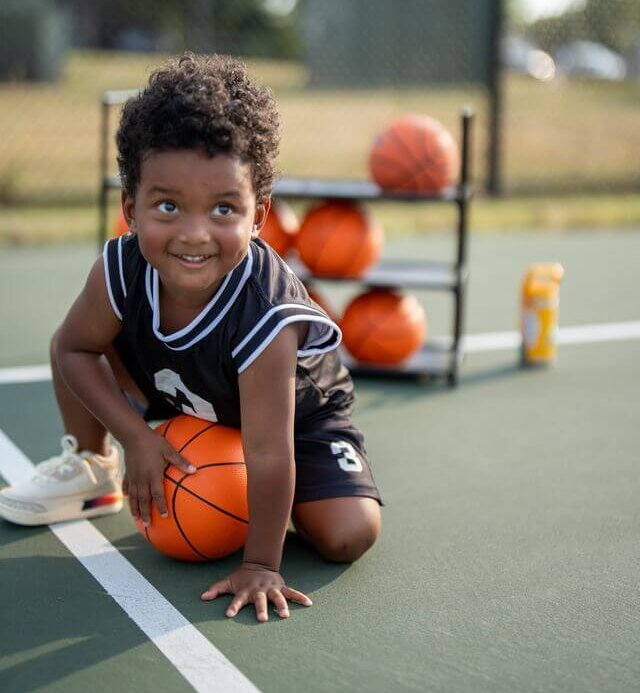
Overview: Madison Gates explains why a preschooler’s first sports coach matters more than résumés or scoreboards, prioritizing fun, belonging, and emotional safety over drills.
Most of us can remember a coach who made an impact. Sometimes it’s the one who believed in us before we believed in ourselves, and sometimes it’s the one who made us want to quit. I played soccer from the time I was three years old, all the way through college as a goalkeeper at the University of Michigan, and I’ve coached players from toddlers to college athletes.
For a three- or four-year-old, a first season isn’t really about learning a sport. It’s about figuring out whether sports feel like a place they can have fun and run around. That first coach plays a big part in answering that question. So as you sign your little one up for their first season, here’s what’s actually worth paying attention to.
Don’t worry about the résumé
It’s natural to ask about a coach’s experience or playing background. At this age, those things matter far less than you might think. When we surveyed more than 1,500 parents of girls in i9 Sports programs, the majority of parents named positive, encouraging coaches as essential to their daughters’ experience. I think that holds true for every young athlete. A former college star who runs practice like a boot camp isn’t the right fit for a preschooler. A patient parent who kneels down to eye level and learns every kid’s name usually is.
Watch what happens after a mistake
If you can catch a few minutes of practice before the season starts, or during the first week, watch for one thing: how the coach responds when a child makes a mistake.
At this age, mistakes are constant. The ball rolls the wrong way. Someone picks it up with both hands. Someone sprints toward the wrong goal with total confidence. A great first coach laughs with them, redirects, and keeps the energy up. A coach who sighs, corrects a child in front of the group, or treats a missed kick like a problem to fix… is teaching a lesson your child doesn’t need to learn yet: that getting it wrong is something to be afraid of.
Look for fun, measured in small wins
Fun can sound like a soft goal. It isn’t. Fun is the reason kids come back. And for little kids, winning looks very different than it does for adolescents, teenagers, or adults. It’s a first kick that actually makes contact, a pass to a friend, or a high five after a teammate scores. That’s their fun, and that’s their winning.
So look for practices built around games rather than drills and long lines. Are kids moving most of the time, or waiting their turn? Does every child get to touch the ball? Does everyone get to play? A first season spent mostly on the sideline is a season your child won’t remember fondly.
Notice whether the coach actually sees your child!
The best coaches I’ve worked with, at every level, share one philosophy: person first, player second. With preschoolers, that looks like a coach who notices the shy kid holding onto mom’s leg and invites her in without pressure. A coach who comforts the one in tears and celebrates the one who finally kicked the ball. A coach who talks about sharing, listening, and cheering for teammates. At i9 Sports, coaches teach one sportsmanship value each week, because those lessons are part of the game, not separate from it.
Belonging comes before skill at this age. Kids are far more willing to try something new when they feel comfortable, and one of the clearest things parents tell us is that kids are more likely to keep playing when they know someone on the team. If your child has a friend from preschool or down the street who wants to play, sign them up together. It can make a bigger difference than any drill.
Be wary of a program that leads with standings
Here’s my biggest red flag: a program for young children that talks about scoreboards, rankings, or standings before focusing on what really matters… having fun, building confidence, developing skills, and making every child feel included. Your three-year-old doesn’t need professional training. There’s plenty of time for competition later, if and when they want it. Right now, the goal is a child who finishes the season asking when they get to play again.
It’s also okay to let your child try more than one thing. Growing up, I was one of those kids who did everything: soccer, volleyball, lacrosse, dance, gymnastics, even violin and piano. Soccer became the thing I fell in love with, but I got there by trying a lot of things first. Ask your child what sounds fun to them, and let that be your guide.
Your role matters, too
Even the best coach can’t do it alone. The most important person on the sideline is you. Be your child’s number one fan. Cheer for effort, not outcomes, and skip the play-by-play critique on the drive home. Remember that many youth coaches are volunteers balancing jobs and families of their own, so a simple thank you to them goes a long way.
When I think about everything sports gave me, very little came from winning; instead, it came from people who made me feel like I belonged and that it was okay to mess up. My first soccer coach was my “Uncle Brian,” and our team was named the Purple People Eaters! I was able to play with my best friend (whose dad was our coach), and we still feel like sisters to this day. We took different paths in sports, but that experience gave us both something that lasted a lifetime. A big hat’s off to the coaches who make it fun, build friendships, and create a love for the game from day one!
 ABOUT THE AUTHOR
Madison Gates is the VP of Marketing at i9 Sports, the nation’s largest multi-sport youth sports provider and part of Youth Enrichment Brands, offering leagues, camps, and clinics for kids starting at age 3. A former Division I soccer goalkeeper at the University of Michigan, she has coached at every level from toddlers through college and the Olympic Development Program. Today, she leads national brand strategy and initiatives like Gains are for the Girls, which aims to get 500,000 girls playing in i9 Sports programs annually by 2030. Madison is passionate about building youth sports environments rooted in confidence, belonging, and fun. For more information, visit https://www.i9sports.com/about/gains-for-girls.
RELATED ARTICLES
- The First-Time Parent’s Guide to Safe Park Play
- Farm Schooling: Growing Minds From the Ground Up
- Kindergarten Readiness
Cover photo by Jamie Kimball