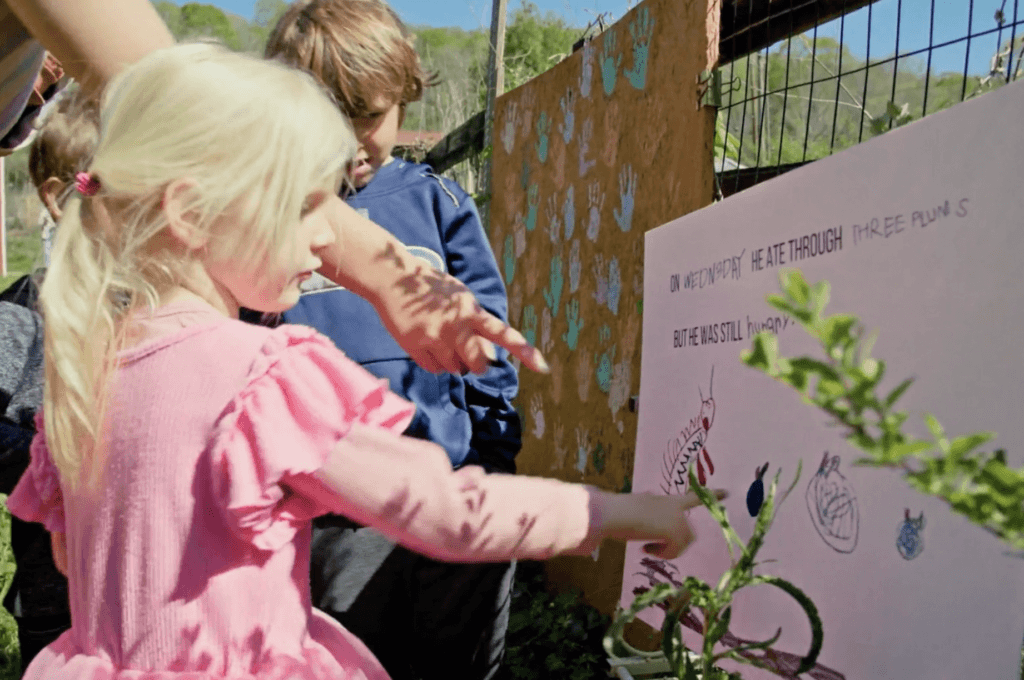
Growing Minds from the Ground Up: Why Farm Schools Matter for Our Youngest Learners
As farm schools, nature and forest schools, and outdoor-based learning overall gain momentum across the country, early childhood educators are discovering something profound: all children, including those ages 5 and under, thrive in outdoor, hands-on environments where learning feels natural, organic, and alive.
A new YouTube docuseries called “FARM SCHOOL’D”, produced by FARMUSE and hosted by Taylor Moran, a content creator, homeschool educator, and founder of The Natural State School in Arkansas, showcases students of various ages exploring farm-based learning through animal care, growing food, tending gardens, and hands-on projects at multiple farm school locations.
These outdoor classroom experiences with educators, families, and students point to something particularly transformative happening with the youngest of learners.
The Critical Years: Early Childhood Benefits of Farm-Based Learning
For children ages 5 and under, farm schools offer an environment perfectly aligned with how young brains naturally learn. Without the pressure of traditional academics, toddlers and preschoolers engage in sensory exploration, build motor skills, and practice emotional regulation through everyday farm activities.
Collecting eggs teaches fine motor skills and responsibility. Planting seeds sparks curiosity about growth and nature’s cycles. Independent and team-based play in mud and grass builds confidence and resilience. Walking with animals teaches empathy and observation. These aren’t lessons—they’re lived experiences that form the foundation for lifelong learning.
“As children spend time outdoors, in nature, they develop a bond with the earth, and current research finds that this early connection contributes to a strong sense of community and care,” says Dr. Jean Lomino, founder and director of the Forest School Teacher Institute. “As a former classroom teacher, nature center director, and university professor, I co-founded Wauhatchie Forest School in Chattanooga, Tennessee, in 2015, and then in 2021, launched Nature Kin Farm & Forest School at Crabtree Farms, also in Chattanooga. I have observed firsthand the profound benefits children gain when we place them in farm environments where they can touch soil, observe animals, and participate in real work alongside adults.”
Not only are children exploring the land and the world around them, but through these direct experiences, they are gaining critical skills including resilience, adaptability, teamwork, and curiosity, Dr. Jean explains. “And these, we know, are the keys to lifelong learning, academic achievement, and successful careers,” she adds.
“Children learn that their actions matter, that they can care for living things, and that the world responds to their effort. That confidence and understanding that ‘I can make a difference’ becomes the foundation for everything they learn later,” Dr. Jean continues. “Farm schools for our youngest learners aren’t an alternative to early childhood education, but rather they’re a place where education is at its most powerful and authentic.”
Regulation, Resilience, and Real Skills

Beyond academics, farm environments naturally support emotional regulation in young children. The rhythm of outdoor work, the calming effects of nature, and the sense of accomplishment from contributing to real tasks create conditions where young children feel safe, engaged, and valued.
For families who recognize that our youngest children are spending too much time indoors and on screens, farm schools offer a compelling alternative: a place where learning happens through play, observation, and participation in the natural rhythms of farm life.
Building Tomorrow’s Land Stewards Today
Tractor equipment company Kubota supports initiatives like the “FARM SCHOOL’D” docuseries because the company recognizes that land stewardship begins early.
“This series introduces us to families and children who are spending their formative years connected to soil, plants, and animals and are developing relationships with the land that will hopefully last a lifetime,” says Lucas Mack, Senior Director of Brand for Kubota North America. “We help to provide quality equipment that supports the farm schooling lifestyle, providing valuable tools so they can continue managing the land and teaching these valuable lessons to today’s youth to help them become tomorrow’s farmers, ranchers, gardeners, and land stewards.”
For the youngest learners, farm schools are proving to be the birthplace of a lifelong connection to the land. To learn more about season one of this four-part series out now, visit YouTube at https://www.youtube.com/@FARMSCHOOLD.
ABOUT FARM SCHOOL’D
“FARM SCHOOL’D” is a four-part docuseries created by FARMUSE, a Nashville-based full-service production company specializing in narrative, documentary, and commercial storytelling that connects people and sparks curiosity. The series is hosted by Taylor Moran, a content creator, homeschool educator, and founder of The Natural State School, who is also known for the popular outdoor and parenting platform Leaf & Learn. Supported by Kubota North America Corporation, a global equipment manufacturer with a more than 130-year history of supporting land-connected communities, the docuseries is a collaboration that reflects a shared commitment to demonstrating how education and land stewardship can thrive when stories are told authentically, and communities are supported by partners who believe in their mission.