About Squabbles
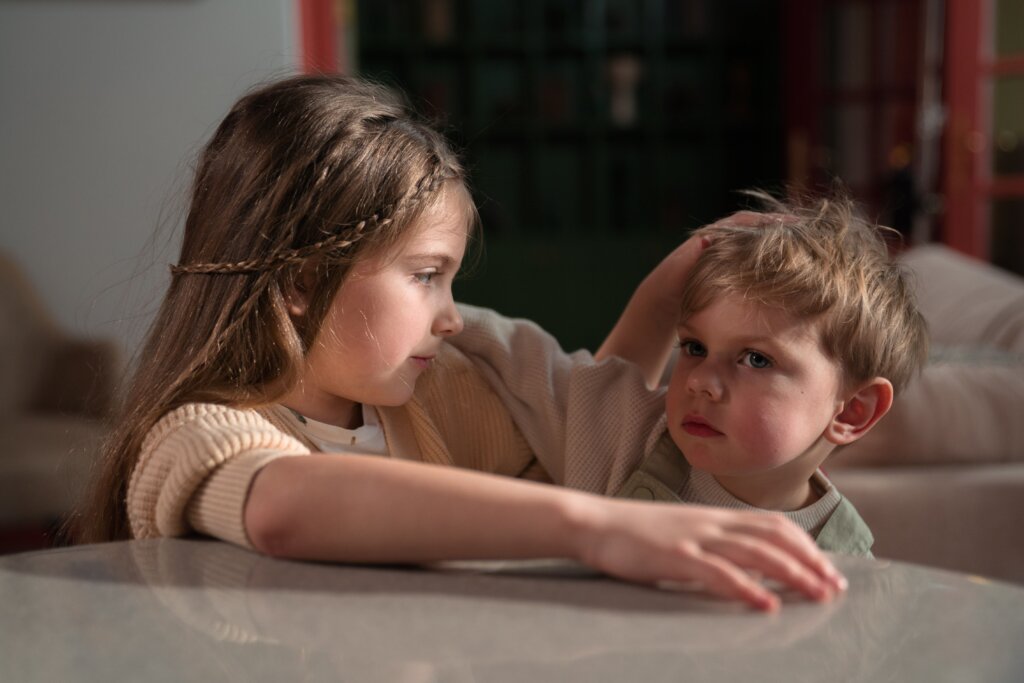
Ideally, families experience home as a harmonious haven. Yet sometimes daily life unravels into drama, hurriedness, consternation, or squabbles. Although dissension—between parents and children, or among family members—often starts out mildly, it can escalate into standoffs or shouting matches with emotions running high and each person trying to be “heard.” In the throes of such clashes, kids and parents can feel frustrated, angry, disappointed, and even helpless. These situations can occur from toddlerhood, through adolescence, and beyond.
Regardless of how such occurrences begin, it’s best to avoid laying blame, and to try to handle matters productively rather than engaging in confrontation or power struggles. That is, strive to engage with one another thoughtfully and sensitively, rather than defiantly or heatedly. Disagreements are a natural part of life, and can be de-escalated if parents take a calming approach.
Suggestions For Parents
Here are a few strategies families might want to try:
- Take a bit of time apart. Sometimes stepping back from the “front lines” provides new and valuable perspectives. It also enables everyone to have an opportunity to collect their thoughts, and let emotions dissipate.
- Be savvy. Don’t allow yourself to be baited or drawn into ongoing arguments. (Envision taking the sail out of the wind—as if you’re the sail, and your child’s words are the wind.)
- Embrace the power of silence. It does not mean you agree with everything that’s transpiring, but it can have a cooling effect. And, it’s more respectful than bickering. Meanwhile, don’t fume. It’s counterproductive. Try deep breathing, and quiet counting can also be soothing. (Demonstrate how.)
- Listen to one another. Really listen, without being judgmental. Children become irritated when they feel they aren’t being heard. You can rephrase what you hear, or ask simple follow-up or clarifying questions if need be.
- Be fair. Co-create reasonable expectations and timelines for kids’ tasks or responsibilities. Work at building open, two-way communication.
- Be encouraging. Consider how you can recognize one another’s positive efforts, strengths, or accomplishments as a step toward defusing negativity. Look for silver linings—for instance, by appreciating your child’s curiosity, overtures, and willingness to convey their feelings.
- Maintain a sense of humor. Share an upbeat vibe. It helps to overcome feelings of indignation or displeasure, and lightens the mood.
Resolutions
If an argument or power struggle escalates and gets out of hand, a situation or a relationship can start to destabilize. Try to find a mutually acceptable approach to resolve conflict. For example, if children do not want to clean up after playing, what might problem-solving look like? Do they have any suggestions? Encourage them to think and then share their ideas! Or perhaps you can brainstorm together. Possibilities might include fun challenges, color-coded action steps and checklists, silly short-cuts, interim finish lines, musical interludes, or other creative ways to tackle the disarray. Children’s efforts, and their active involvement (sometimes referred to as agency), can help fuel and fortify resolutions in circumstances like this—or in other situations that might arise.
Keep in mind that different temperaments, surroundings, and past experiences will prompt a range of behaviors, responses, and ideas. (This applies to adults as well as children!) Therefore, try to anticipate triggers, and be alert to situations that may get out of hand. You know your child, so make a determined effort to de-escalate confrontations before they erupt and become hard to manage.
Last Words
Power struggles need not be struggles, and squabbles don’t have to be “squabbly” if those involved commit to a calm, measured, respectful, and collaborative approach—and strive to understand each other’s feelings and points of view. And, in the whole scheme of things, that will lead to family harmony!
Author’s Note
A parent-child bedtime conflict is an important element in my new children’s picture book, GRUMBLESOME, wherein a young boy uses his resolve and creativity to amend a thorny problem. GRUMBLESOME is illustrated by the incomparable Brandon Dorman! (Publication September 2026; pre-orders available now across retail outlets.) Find out more at joannefoster.ca.
ABOUT THE AUTHOR
Dr. Joanne Foster is an award-winning author of several books. For additional information, and for resources on learning, creativity, productivity, and children’s well-being—and to subscribe to her newsletter—go to https://joannefoster.ca
RELATED ARTICLES
Cover Image by Ron Lach