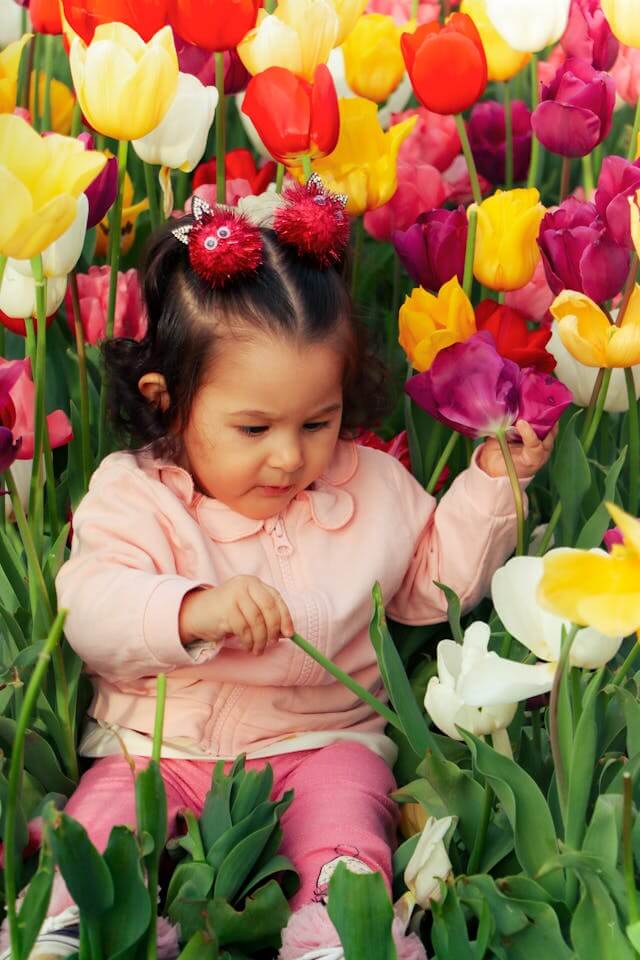
Help your child learn and grow with these simple, Screen-free spring activities.
Spring has a way of waking everything up, including young children’s curiosity. Longer days, warmer weather, and the first signs of new growth naturally invite movement, questions, and discovery. For parents of babies, toddlers, and preschoolers, spring can feel like the perfect time to encourage learning and development. Still, many parents wonder how to do that in ways that feel manageable, meaningful, and screen‑free amid already busy days.
The good news is that early learning doesn’t require elaborate plans, special supplies, or hours of preparation. In fact, some of the most impactful learning moments for young children happen during simple, everyday experiences, especially those rooted in play, nature, and connection. Spring provides countless chances to slow down, notice, and explore together without adding pressure to parents’ plates.
Children learn best when experiences are hands‑on, flexible, and driven by their natural interests. With that mindset, spring learning becomes less about doing more, but rather, about recognizing the learning opportunities that already exist all around you.
Why Spring Is a Natural Learning Season for Young Children
Young children are sensory learners by nature. They explore the world through touch, movement, sight, sound, and smell, and spring supports all of it. From blooming flowers and chirping birds to muddy puddles and gentle breezes, seasonal changes invite children to observe, ask questions, and engage their senses in meaningful ways.
Outdoor and seasonal play supports early cognitive development, social‑emotional growth, and physical skills. When children move their bodies, test ideas, and explore new environments, they build confidence and problem‑solving abilities. Just as importantly, these experiences reinforce that learning doesn’t have to be formal or structured. Young children don’t need flashcards or lessons to learn. They learn best by doing, experimenting, and making sense of the world around them.
Sensory Play Using Nature
Sensory play is a critical part of early brain development. Experiences that engage multiple senses help children process information, build neural connections, and develop language and self‑regulation. Best of all, sensory play doesn’t require a backyard or specialized materials.
A simple sensory garden in a pot or container can offer weeks of exploration. Using household items like small pots, soil, and easy‑to‑grow plants such as basil, mint, or lamb’s ear, children can touch, smell, and observe as plants take root and grow. Parents can support learning by talking through what their child notices. Is the leaf smooth or fuzzy? What does it smell like? How does the soil feel after watering?
These conversations build vocabulary and communication skills while helping children understand that their observations matter. It’s also important to focus on the experience rather than the final result. There is no “right” way for a plant to grow or for a child to explore. Curiosity is the goal.
Watching Things Grow
Watching something grow over time is a meaningful way to introduce children to early science concepts such as change, patience, and cause and effect. It can also help foster responsibility and emotional connection.
One creative activity many families enjoy is making “plant people” using socks, soil, and grass seed. Children can decorate their plant person with markers, yarn, or googly eyes and then help care for it with regular watering. Over time, they’ll begin to see how their actions support growth. Even simple daily check‑ins, like looking for new sprouts or noticing longer “hair,” provide chances to talk about change and build observation skills.
These experiences support fine motor development, creativity, and problem‑solving. Just as importantly, they help children develop empathy and pride as they care for something living and see the results of their efforts.
Everyday Outdoor Adventures That Build Skills
Unstructured outdoor play is one of the most valuable tools for early learning. Whether it’s time in the backyard, a neighborhood walk or a trip to a local park, outdoor experiences help children build independence and confidence.
Nature walks can quickly turn into learning adventures by noticing colors, listening for sounds, or comparing textures. Collecting leaves, sticks, or rocks can lead to sorting games, patterns, or simple storytelling. Physical movement, such as jumping, climbing, balancing, and running, supports coordination and body awareness while giving children opportunities to take safe risks.
Parents don’t need to direct or teach during these moments. Asking open‑ended questions like “What do you see?” or “What do you think will happen next?” helps encourage thinking and communication without pressure. Often, simply being present and engaged is enough.
Keeping It Simple for Parents
One of the biggest misconceptions about early learning is that it needs to look impressive or carefully planned. In reality, consistency matters more than complexity. Short, repeated experiences, such as daily outdoor time or weekly plant check‑ins, often have more long‑term impact than one‑time activities.
Equally important is following a child’s interests. If a child loses interest before an activity is finished, that’s okay. Learning still happens through exploration itself. Flexibility helps children feel confident and supported, and it can ease stress for parents as well.
Letting Curiosity Lead
Spring offers built‑in opportunities for learning that fit naturally into family routines. By slowing down, stepping outside, and paying attention to what sparks a child’s interest, parents can support meaningful learning without adding extra pressure.
The most reassuring reminder is that learning is already happening all around you. Sometimes, the simplest moments—watching a seed sprout, splashing through puddles, or asking endless “why” questions—are exactly what help young children learn and grow.
ABOUT THE AUTHOR
Rorie Wells Ellerson is the Learning Environments Manager at The Goddard School.
RELATED ARTICLES
Cover photo by Beyza Yalçın