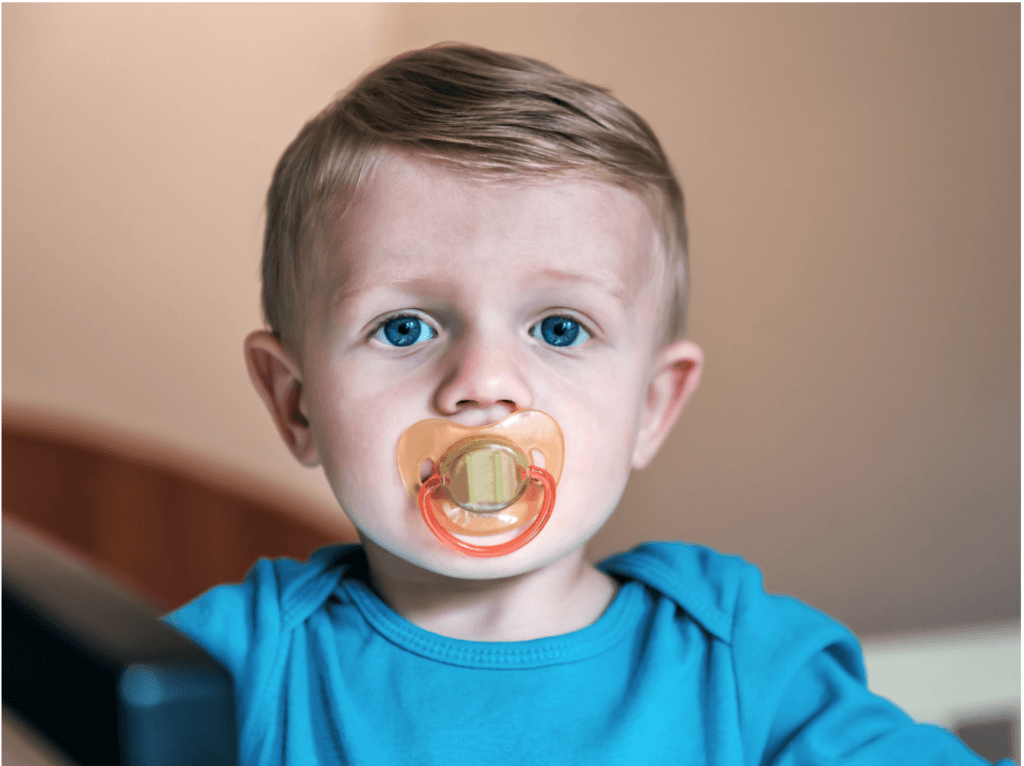
Overview: While pacifiers provide soothing comfort for babies, prolonged use can negatively impact tooth alignment and jaw development. Understanding the risks—such as open bites and crossbites—helps parents know when to transition away from the habit and when to seek early orthodontic guidance.
Pacifiers can help soothe babies, especially when they are tired or upset. However, as your child grows, prolonged pacifier use may affect how their teeth come in and how their jaws develop. The risk depends on how long your child uses a pacifier, how often they use it, and whether the habit continues as their permanent teeth begin to emerge. In this blog, we will look at how prolonged pacifier use can affect tooth alignment and jaw development, along with the treatment options available if these changes occur.
How Does Prolonged Pacifier Use Impact the Teeth?
Pacifier use is generally less concerning during infancy, but frequent use over several years can place pressure on the developing teeth and jaws. Here is how it may affect your child’s oral development.
-
Open Bite
An open bite occurs when the upper and lower front teeth do not meet when your child closes their mouth. If your child frequently sucks on a pacifier, the pressure can interfere with how these teeth grow and come together. This may leave a visible gap between the front teeth, even when the back teeth touch.
-
Posterior Crossbite
A posterior crossbite occurs when some of the upper back teeth sit inside the lower back teeth instead of outside them. Prolonged pacifier use may contribute to changes in the shape of the upper jaw, increasing the risk of this bite problem. A crossbite can affect how your child chews and how their teeth fit together.
-
Jaw Development and Palate Shape
The repeated sucking motion and pressure from a pacifier can influence the shape of the roof of the mouth, also called the palate. In some children, prolonged use may contribute to a narrower upper jaw.
These changes can affect how the upper and lower jaws fit together and may leave less room for the teeth to align properly. The extent of the effect depends on factors such as how often your child uses a pacifier, how intensely they suck, and how long the habit continues.
-
Overbite or Protruding Front Teeth
Long-term pacifier use can also contribute to changes in the position of the front teeth. The upper front teeth may tilt forward, making them appear more prominent. In some cases, the bite may also become misaligned.
Protruding teeth can be more vulnerable to injury during falls or sports. If you notice changes in your child’s bite, a dentist can assess whether the pacifier habit may be contributing to the problem.
What Are the Treatment Options for Pacifier-Related Teeth Misalignment?
Here’s a closer look at the treatment options for pacifier-related teeth misalignment:
-
Stopping the Habit First (Behavioral Approaches)
The first step is usually to help your child stop using the pacifier, particularly if the habit is contributing to changes in their bite. You can gradually reduce pacifier use, offer other ways to soothe your child, and praise them for going without it.
In younger children, some bite changes may improve naturally after they stop using a pacifier. However, more noticeable misalignment may need orthodontic treatment.
-
Traditional Braces
If the teeth remain misaligned after your child stops using the pacifier, braces may help correct their position. Traditional metal braces use brackets and wires to gradually move the teeth into better alignment.
They may be recommended for problems such as protruding front teeth or certain bite issues. Your orthodontist will determine the right time to begin treatment based on your child’s dental development.
-
Palatal Expanders
A palatal expander is an orthodontic appliance used to widen a narrow upper jaw. It may be recommended for children with a posterior crossbite or limited space in the upper dental arch.
The appliance gradually creates more room and helps improve how the upper and lower teeth fit together. It is generally most useful while the jaw is still developing.
-
Tongue Cribs or Bite Blocks
An orthodontist may recommend a tongue crib or bite blocks for certain bite problems. A tongue crib helps discourage tongue thrusting, which can contribute to an open bite. Bite blocks can help manage how the teeth meet during treatment. These appliances are selected based on the cause of the misalignment, rather than pacifier use alone.
-
Early Alignment Systems
Some children may benefit from early orthodontic treatment to guide developing teeth and address bite problems before they become more difficult to manage. Depending on the child’s needs, this may involve removable appliances or other orthodontic systems.
Not every child needs treatment at an early age. Regular dental checkups help identify problems and determine whether monitoring or intervention is appropriate.
Closing Thoughts
Pacifier use does not automatically lead to crooked teeth or jaw problems. However, using one frequently for an extended period can affect your child’s bite and oral development. If your child is still using a pacifier as they grow, speak with their dentist about when and how to stop the habit. If you notice gaps between the front teeth, a crossbite, or other alignment concerns, an orthodontic assessment can help you understand whether treatment is needed.
ABOUT THE AUTHOR
Dr. Satish Pai is an orthodontist and Ivy League-trained dentist who has served as a faculty member at Columbia University. He believes a perfect smile not only makes a person look great but also makes them feel great. As the Partner at Putnam Orthodontics, he is dedicated to providing the best orthodontic treatments to his patients. He also writes to educate people about everything in orthodontics and the importance of correctly aligned teeth, along with good oral health. In his free time, you can find him golfing, doing yoga, surfing, and spending time with his family.
RELATED ARTICLES