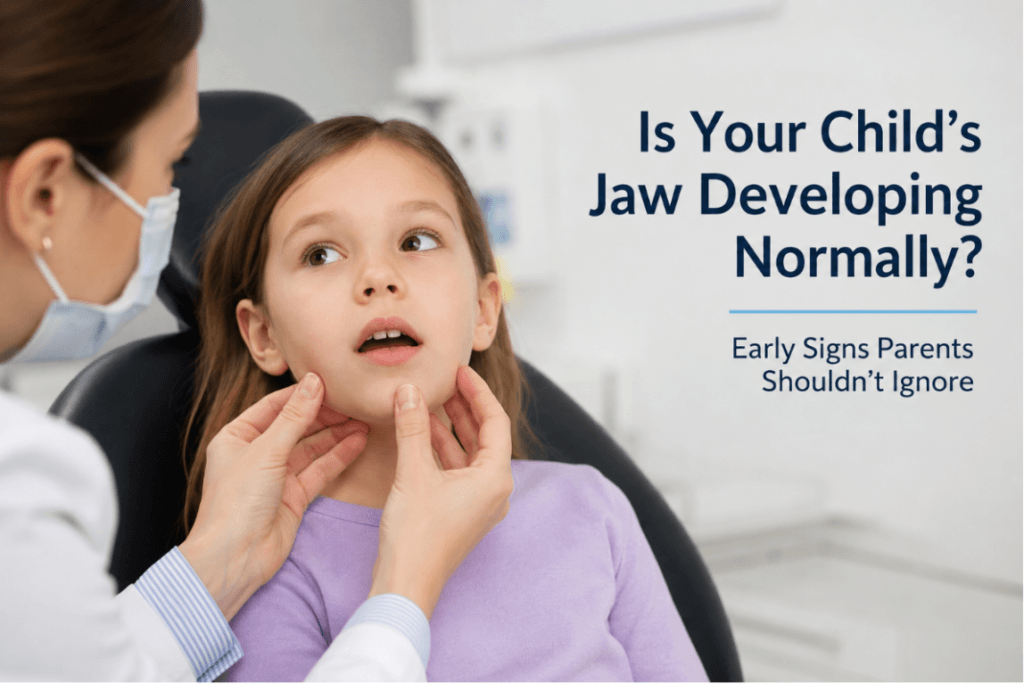
Parents usually pay close attention to milestones like walking, talking, and teething, but jaw development is another important part of early childhood growth that often gets overlooked. The development of the jaw affects how a child breathes, eats, speaks, and how their teeth eventually align as they grow.
In many cases, early jaw development issues are subtle at first. A child may breathe through their mouth, struggle with chewing certain foods, or develop uneven bite patterns over time. Catching these signs early can help parents understand whether their child may benefit from a professional orthodontic evaluation later on.
6 Warning Signs of Jaw Development Issues in Toddlers
Not every child develops at the same pace, and small differences are normal during growth. However, certain patterns may suggest problems with baby’s jaw development or the way the upper and lower jaws are growing together.
Here are some early signs parents should pay attention to.
1. Breathing Through the Mouth
Frequent mouth breathing can sometimes be linked to jaw development in babies and young children. Children who regularly breathe through their mouths instead of their noses may develop changes in facial growth, jaw positioning, and dental alignment over time.
Parents may notice:
- Open-mouth posture during the day
- Mouth breathing while sleeping
- Snoring or noisy breathing at night
- Dry lips or dry mouth in the morning
Long-term mouth breathing can affect the natural development of jaw structure and facial muscles, especially during early childhood growth years.
2. Bite and Teeth Alignment Problems
As permanent teeth begin coming in, certain bite patterns may indicate a developing jaw imbalance or a possible misaligned jaw.
Parents may notice:
- Crowded teeth
- Teeth that do not meet evenly
- An overbite or underbite
- Crossbites
- Difficulty closing the mouth comfortably
In some children, the upper and lower dental midlines may not line up correctly. A noticeable Mid-Line Shift can sometimes be an early sign of jaw misalignment for kids or uneven jaw growth.
Early evaluation can help identify whether a child’s bite is developing properly or if orthodontic monitoring may be needed.
3. Facial Asymmetry
Mild facial differences are common, but more noticeable imbalance in facial appearance may sometimes point to uneven jaw growth.
Parents may observe:
- One side of the jaw appears more developed
- The chin shifting to one side
- Uneven smiles
- Facial imbalance when the child bites down
Facial asymmetry does not always mean there is a serious issue, but it can occasionally be associated with a child’s jaw misalignment or uneven jaw positioning during growth.
4. Speech Concerns
The development of the jaw also plays a role in speech and tongue movement. Some children with jaw alignment issues may have trouble pronouncing certain sounds clearly.
Parents may notice:
- Lisping
- Difficulty pronouncing certain letters
- Delayed speech clarity
- Trouble coordinating tongue movements
Speech concerns can have multiple causes, but jaw structure and oral development may sometimes contribute to these challenges.
5. Difficulty Chewing or Biting
Children with healthy jaw development are usually able to bite and chew comfortably as they grow. Difficulty chewing may sometimes signal problems with jaw alignment, bite development, or oral muscle coordination.
Signs parents may notice include:
- Chewing mostly on one side
- Avoiding certain textures or harder foods
- Trouble biting into foods
- Complaints of jaw discomfort while eating
Some children naturally prefer softer foods during certain stages, but consistent difficulty chewing can sometimes be linked to kids’ jaw misalignment or bite concerns.
6. Tongue Ties and Restricted Movement
Tongue movement plays an important role in baby jaw development, feeding, swallowing, and speech. A tongue tie occurs when the tissue under the tongue limits normal tongue movement.
In some cases, restricted tongue movement may affect:
- Feeding in babies
- Speech development
- Oral muscle function
- Natural jaw and facial development
Parents may notice that a child struggles to lift their tongue fully or has difficulty with certain mouth movements. Early evaluation can help determine whether tongue restriction may be affecting oral development.
When Should Parents Seek an Evaluation?
Not every child with one of these signs will need orthodontic treatment. However, early orthodontic evaluations can help identify whether the jaws, teeth, and facial structures are developing normally.
Many orthodontists recommend that children have an initial orthodontic screening by around age seven, even if no obvious problems are present. Early monitoring allows specialists to identify growth concerns before they become more complicated later.
Conclusion
Jaw development affects much more than just the appearance of a child’s smile. The way the jaws grow can influence breathing, speech, chewing, facial balance, and long-term dental alignment.
While some variations in growth are completely normal, ongoing signs like mouth breathing, chewing difficulties, facial asymmetry, or bite concerns may be worth discussing with a dental or orthodontic professional. Paying attention to these early patterns can help parents better understand how their child’s jaw and facial development are progressing over time.
ABOUT THE AUTHOR
Dr. Satish Pai is an orthodontist and Ivy League-trained dentist who has served as a faculty member at Columbia University. He believes a perfect smile not only makes a person look great but also makes them feel great. As the Partner at Bright Orthodontics, he is dedicated to providing the best orthodontic treatments to his patients. He also writes to educate people about everything orthodontics and the importance of correctly aligned teeth, along with good oral health. In his free time, you can find him golfing, doing yoga, surfing, and spending time with his family.
RELATED ARTICLES
Cover image provided by Dr. Satish Pai