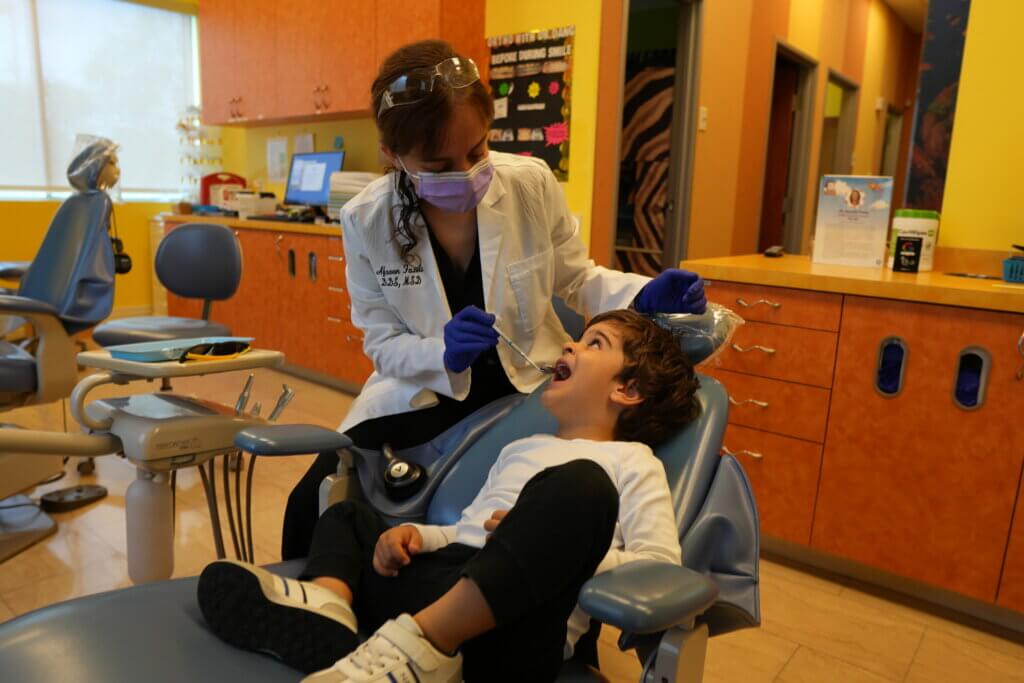
As a pediatric dentist and a mom, I see a moment play out almost every single day, and it has nothing to do with teeth.
A parent walks in holding their toddler’s hand, gets settled into the chair beside them, and before I’ve even had a chance to say hello, they start apologizing. For the timing of the visit. For their child’s diet. Because they didn’t know they were supposed to start coming sooner. Sometimes it’s a quiet “I know, I should have brought him in earlier.” Sometimes it’s a full explanation of the last two years of snack choices. Either way, the guilt is there before we’ve even looked at one tooth.
I understand it completely. When you love your child the way parents do, anything that feels like a gap in their care lands differently than it would anywhere else. But here’s what I want you to hear, and I mean this sincerely: most of what you’re carrying into that appointment doesn’t need to be carried at all.
Here’s What I Actually See — and What I Wish Every Parent Knew
After years of seeing families in the chair, the guilt tends to cluster around the same few things. And in almost every case, it comes from an information gap, not a gap in care. Here’s what I mean.
Most Parents Have Never Been Told When to Start
One of the most common things I hear is some version of “I thought you weren’t supposed to bring them until they had more teeth” or “I figured we’d wait until they were three.” And honestly? That makes complete sense, because this isn’t information that gets handed to you automatically.
The American Academy of Pediatric Dentistry recommends a child’s first dental visit by their first birthday, or within 6 months of the first tooth coming in. Most first-time parents have never heard of this. They’re doing what feels logical, waiting until there are enough teeth to visit feels worthwhile. So if your child is two or three and this is their first appointment, you didn’t miss something obvious. You just hadn’t been told. Now you have been, and that’s all that matters.
A Cavity Isn’t a Failing Grade
This one is important, so stay with me for a moment.
Baby teeth are more vulnerable to decay than permanent teeth. Their enamel is thinner, which means cavities can develop faster than most parents expect. Add in the realities of feeding a young child, the juice cups, the bedtime bottles, the sticky snacks that are everywhere, and even families who are genuinely trying can end up with a cavity diagnosis.
When a parent tears up in my chair over that news, I don’t reach for a lecture. I reach for an explanation, because that’s what actually helps. Baby teeth matter. They hold space for permanent teeth, support proper speech development, and guide how adult teeth come in later. A cavity in a primary tooth still needs treatment, but a cavity is a clinical finding, not a verdict on the kind of parent you are.
What actually makes a difference going forward
Since you’re reading this and clearly want to do right by your child’s smile, here’s the practical side.
- Start brushing as soon as that first tooth appears. Use a soft-bristled infant toothbrush and a smear of fluoride toothpaste about the size of a grain of rice. That’s all you need. Twice a day, every day, from the very first tooth.
- Watch what lingers on those teeth. Sugary drinks and milk that sit in the mouth overnight are one of the fastest routes to early decay. If your child takes a bottle or sippy cup to bed, water is the only truly safe option.
- Don’t underestimate fluoride. It strengthens enamel and is one of the most effective tools for cavity prevention. Your child’s dentist can apply fluoride varnish at visits, and many tap water sources contain it as well.
- Make the visits a regular part of life. Children who grow up going to the dentist consistently stop seeing it as something to dread. Talk about it positively at home. Avoid words like “hurt” or “shot” before appointments. When the dental office feels familiar and low-stakes, kids build confidence there, and so do their parents.
The thing I most want you to take from this
Parenting a young child is one of the most demanding things a person can do. You’re managing sleep, feeding, development, and a hundred other things at once, and oral health is just one piece of a very full picture. The fact that you made the appointment, that you’re seeking information, that you care enough to wonder if you’re doing it right already tells me a lot about you as a parent.
You’re not failing your child. You’re learning alongside them, which is exactly what good parents do. And honestly, that’s more than enough.
 ABOUT THE AUTHOR
Dr. Afsoon Fazeli, DDS, MSD, is a pediatric dentist and the lead dentist at Discovery Children’s Dentistry & Orthodontics in Carlsbad, California, where she provides gentle, prevention-focused dental care for children from infancy through their teen years. She earned her Doctor of Dental Surgery and Master of Science in Dentistry degrees from the University of Washington, where she also completed her pediatric dentistry residency.
A member of the American Academy of Pediatric Dentistry, the American Dental Association, and the California Society of Pediatric Dentistry, Dr. Fazeli is passionate about building positive dental experiences that set children up for a lifetime of good oral health. As a mother herself, she brings both clinical depth and genuine personal understanding to every family she sees.
RELATED ARTICLES
- Baby’s First Tooth: Essential Information for Parents
- Why You Should Go to The Dentist During Pregnancy
- 5 Things to do For Baby’s Teeth
- Tongue Ties in Newborns — What Parents Need to Know
- Expecting a baby with a cleft lip or cleft palate?
Cover photo: Dr. Afsoon Fazeli, DDS, MSD, performing a dental exam on a young child at Discovery Children’s Dentistry & Orthodontics in Carlsbad, CA