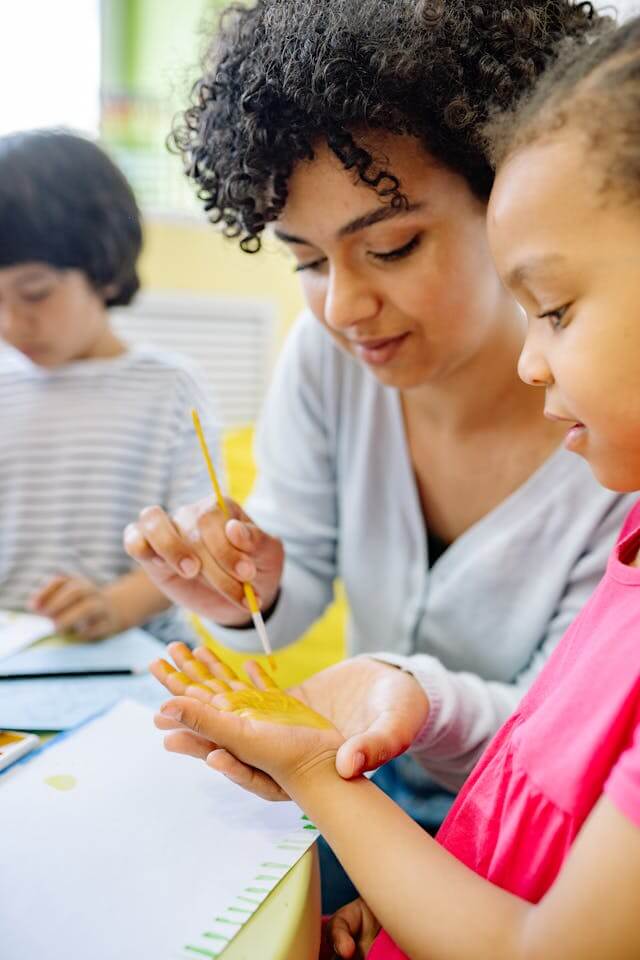
Play is the natural language of young children. It’s how they explore, test ideas, and make sense of the world, providing a foundation for learning. Yet many parents and educators wonder how they can support child development without relying on expensive toys or elaborate setups. The truth is that meaningful, joyful learning doesn’t depend on the things we buy for children; it depends on how we design experiences and engage with them.
One research-backed approach that strikes this balance is guided play. Guided play blends freedom and creativity with gentle adult facilitation, creating experiences that are active, engaging, and joyful – without breaking the bank.
Why Joyful Learning Matters
For learning to resonate with children, it must be more than memorization or passive listening. Decades of research show that children learn best when experiences are active, collaborative, iterative, and joyful. These qualities fuel curiosity, persistence, and creativity – the very skills children need to thrive in a rapidly evolving world.
When children feel delight and wonder, they are more likely to explore, ask questions, and take risks. Protecting that joy and sense of wonder is essential because it drives lifelong learning and problem-solving.
What Is Guided Play?
Guided play occupies the sweet spot between two familiar approaches: free play and direct instruction. Free play, which is child-led and open-ended, is critical for developing social-emotional skills and executive functions. Children learn to negotiate, share, and imagine. But free play alone isn’t optimal for meeting specific learning goals, like counting or letter recognition.
Direct instruction is more efficient for teaching explicit skills like spelling and grammar. Parents and educators can plan backward from a goal and deliver targeted practice. However, direct instruction often lacks the engagement and joy that make learning meaningful.
Guided play combines the best of both worlds. The adult sets up a “just right” environment with thoughtful materials and a flexible prompt aligned to the child’s developmental stage. Then, the adult steps back and lets the child lead. The adult’s role is active but non-directive. They observe, ask open-ended questions, and gently scaffold the experience so the child moves forward without losing ownership of the learning.
The adult serves as the “guide on the side,” watching for emerging skills, adjusting materials to simplify or deepen the challenge, and offering questions that invite investigation, without taking over.
How to Create Joyful, Meaningful Learning Moments at Home or School
The beauty of guided play is that it doesn’t depend on expensive toys. The power is in the interactions we have with children. In fact, open-ended natural and found materials are often more compelling to children because they invite imagination and problem-solving rather than having a single purpose. In short, the way we engage children in exploration of the materials is more important, and the process children use to learn about their world is more impactful than the price tag of the materials.
Start by putting the child at the center. Design activities around developmental stages and interests, not rigid timelines. For toddlers, focus on sensory-rich experiences like pouring or stacking. Preschoolers thrive on pretend play, patterns, and early math. Kindergarteners enjoy social, rules-based games and collaborative projects.
As the guide on the side, observe first. What draws your child in? Where do they get stuck? Ask open-ended questions like, “What do you notice?” or “What could we try next?” Gently offer hints or swap materials, then step back.
Make learning a shared experience by inviting siblings, peers, or caregivers to join in the fun. Rotate roles so everyone gets a turn to lead. Celebrate creative ideas as they emerge and keep your prompts light and playful to maintain the joy in discovery.
Practical Examples You Can Try Today
Here are three simple, low-cost guided play activities that use everyday materials:
- Pantry Patterns and Counting
Gather dry beans, pasta, or cereal along with a muffin tin or ice cube tray. Invite your child to sort and create patterns: “How could we group these? What patterns can we make?” For toddlers, start with big vs. small sorting. Preschoolers can build patterns and count sets. Kindergarteners can record results on a chart and compare quantities. Ask questions: “Which has more? How do you know?”
- Recycled-Build Challenge
Use cardboard, paper tubes, tape, and string to build a tower or bridge. Set a playful challenge: “Can we make it stand without help?” Observe strategies and narrate what you see: “I notice you made the base wider.” Offer nudges like, “What could make it stronger?” Encourage testing and revising. Older children can create a plan before building or add constraints like height limits.
- Neighborhood Nature Hunt
Take a walk with a paper bag and a simple list of items to find, such as a smooth rock, something rough, or something that smells nice. Invite your child to collect and classify. Ask, “How do you know this one is smooth?” Compare objects and sort by color or texture. Preschoolers can draw and label finds to create a “show and tell” museum; kindergarteners can create a simple field guide or tell a story using their treasures.
Let go of the urge to correct every mistake – those mistakes are where the learning happens. Keep your prompts short and playful to maintain momentum and wrap up with a moment of reflection, asking questions like “What surprised you?” or “What would you try differently next time?” to help your child think about their own discoveries.
Guided Play: Your Child’s Launchpad for the Future
Play isn’t just fun; it’s the foundation of how young children learn and grow. Guided play puts the child at the center, sparks curiosity and turns everyday moments into powerful opportunities for discovery. When we create experiences with simple, open-ended materials and step into the role of “guide on the side,” we’re not just teaching skills, we’re nurturing thinkers, creators, and problem-solvers ready to thrive in a world full of possibilities. Lean into play, protect that sense of wonder, and watch learning come alive in joyful, meaningful ways.
ABOUT THE AUTHOR
Peg Oliveira, Ph.D., Child Development Expert and Member of The Goddard School’s Educational Advisory Board
RELATED ARTICLES
Cover image by Yan Krukau