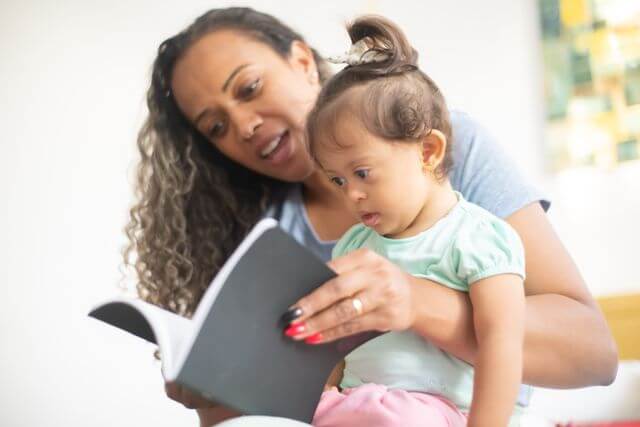
Overview: Exploring how interactive reading techniques transform traditional storytime into a rich conversation, boosting toddler language development, cognitive growth, and parent-child bonding.
Have you ever finished a picture book with your child, only to discover they were far more interested in the dog on the second page than the ending?
With four boys, my wife and I have spent plenty of evenings reading together. We read before bed, my wife takes them to the library during the summer and winter breaks, and we often share books at weekends. I enjoy the stories, of course, but some of the best moments come from the conversations around them.
I’ll ask what the book is about, where a character is going, or why they made a particular choice. I don’t fire off questions on every page. Often, it’s more useful to leave a little space for a child to notice something on their own.
For families with children aged five and under, that approach can start surprisingly early. You don’t need to wait until your child can explain a story. You just need to pay attention to how they’re taking part.
For babies, a conversation doesn’t need words
A baby may not follow the plot, but they can listen to your voice, look at a picture, reach for a page, or respond with a sound. Point to a familiar object and name it. Make an animal noise if you feel like it. Pause to see whether your baby looks, smiles, or babbles. And if they turn away, that’s an answer too: perhaps they’ve had enough for now.
The American Academy of Pediatrics encourages reading together from birth. At this age, what matters is not finishing the book or introducing letters ahead of schedule. It’s the chance to share language, attention, and some time together.
A few minutes count. So does reading the same page twice.
Toddlers have their own plans for the story
Anyone who’s read the same picture book again and again knows that young children don’t always share our enthusiasm for variety. Repetition can be part of the pleasure, and the familiar pictures make it easier for a toddler to join in.
You might ask, “Where’s the cat?” Your child points. You reply, “There it is, hiding under the chair.” Or perhaps they point to a bus that has nothing to do with the main story. Talk about the bus. They’ve shown you what interests them.
The important part is the exchange. Ask a simple question, allow time for a gesture or a word, then add something to what they’ve offered. If your child says “dog”, you might reply, “Yes, a big dog. I wonder where it’s going?”
This isn’t a test. If your toddler would rather turn back three pages, that’s fine too.
As children grow, let them do more of the thinking
By three, four, or five, many children are ready for questions that don’t have just one correct answer. You can still ask what and where, but you can also wonder aloud together.
“Why do you think the bear is hiding?”
“How do you think the little girl feels?”
“What would you do next?”
These questions invite children to explain things in their own way. You may hear an unexpected interpretation or discover that your child has noticed something you missed. That’s part of what I enjoy about reading with my boys. The story gives us something to talk about, and I get to hear how they understand it.
If an answer seems odd, I try to stay curious rather than jump straight in with a correction. Asking “What makes you think that?” often opens a better conversation than announcing the right answer.
There is research behind this kind of interaction. A practice called dialogic reading, where adults invite children to talk about a picture book and build on their responses, has shown positive effects on preschool children’s spoken language in research reviewed by the US Department of Education’s What Works Clearinghouse. That doesn’t mean every question improves a child’s skills, or that a good parent should ask questions constantly. It does suggest that what happens between the lines can be useful too.
Don’t turn bedtime into a lesson
With four boys, I’m aware that no two children have to enjoy a book in exactly the same way. Some children want to talk. Others prefer to listen, point, move around, use signs or return to one favorite picture. Some evenings everyone is tired. On those nights, simply reading aloud is enough.
There is also no need to buy a shelf of new books. Library books, borrowed books, picture books without words and stories in the languages your family speaks all give you something to share. A grandparent, sibling or other caregiver can be part of that reading time as well.
When I ask my boys why, where, or when something happens, I’m not trying to turn a story into homework; I’m interested in their answers. Over time, we’ve felt that our reading routine has helped our children enjoy books and talk more confidently about what they’re reading. Our eldest now reads every day without needing a reminder. I can’t put that down to storytime alone, but I’m glad books have stayed part of family life.
Perhaps the easiest way to start is to choose one page tonight and ask one gentle question: “What do you notice?” Then listen. If your child replies with a sentence, a single word, or a finger pointed at a picture, you’ve already begun the conversation.
REFERENCES AND SUPPORTING RESEARCH
1. American Academy of Pediatrics: How to Share Books With Your Baby
2. US Department of Education, What Works Clearinghouse: Dialogic Reading
3. Reading Rockets: Use a PEER When You Read Aloud
ABOUT THE AUTHOR
Ian Nenke is an Australian father of four boys living in Malaysia. He works in international education and writes about parenting and how children learn. At home, he and his wife make reading part of everyday family life, from bedtime stories to library visits during school holidays. He is particularly interested in the conversations that help parents understand how children see the world. His writing draws on family life and his experience working with international families. Learn more at: https://raisingwhatsnext.com/
- How Personalized Storytelling Can Transform a Child’s Love for Reading
- Bedtime Reading & Child Development
- Cultivate a Love of Reading
Cover Image by Kampus Production