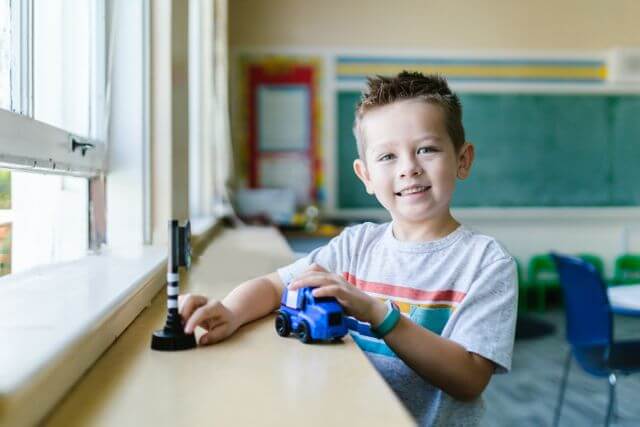
As children prepare to enter Kindergarten, families often wonder what it really means to be ready for school.
Readiness is not about arriving on the first day already knowing how to do school. It is about developing the confidence, independence, and skills needed to learn how.
Research on school readiness supports a broad view of what it means to be prepared for Kindergarten. Readiness includes more than letters, numbers, and early academics. It also includes social-emotional development, language, physical well-being, self-regulation, and approaches to learning such as attention, persistence, flexibility, and curiosity.
In other words, being ready for Kindergarten is as much about how a child approaches learning and participates in a classroom community as it is about what they already know.
What does readiness really look like?
Readiness begins with being able to separate from a parent, even if it is difficult at first. It looks like following a simple routine, listening to directions, waiting for a turn, asking for help, opening a lunch container, cleaning up after an activity, and trying again when something does not work the first time. Readiness also looks like curiosity! A child who asks questions, experiments, tells stories, notices patterns, wonders how things work, and wants to share what they know is already practicing many of the behaviors that support learning.
These skills do not appear overnight, and they do not develop at exactly the same pace for every child. In many ways, children become ready for school by being in school. Every time they line up, transition to a new activity, solve a problem with a friend, follow a classroom routine, or manage a moment of frustration, they are building the skills that help them become successful learners.
Parents can support many of these same skills at home, starting with independence. Give children opportunities to manage the everyday tasks they will encounter at school. Let them practice dressing themselves, using the bathroom independently, washing their hands, opening food containers, putting on a backpack, cleaning up their belongings, and completing simple routines. It may take longer at first, but every opportunity to do something independently builds confidence. While it may be hard, let them struggle, just a little. When a zipper is difficult, a tower falls down, or a puzzle piece does not fit, resist the urge to immediately fix it. Give encouragement, ask a question, or offer just enough support for them to keep going. Persistence is a readiness skill too.
What you can do to support your child
There are many things that you can do in your everyday life that help children to develop lifelong abilities. Playing with your child helps to build attention. Puzzles, blocks, drawing, pretend play, cooking, board games, and simple projects all give children opportunities to stay with a task, solve problems, and work through frustration. They are learning in the simple moments, and they don’t even realize it.
- Let children make choices even if it’s not what you would have chosen. Choosing between two outfits, deciding which book to read, helping plan a snack, or choosing what to do first in a routine gives children practice with decision-making and independence.
- Talk to your child often. Conversation is one of the most powerful ways to support readiness. Ask open-ended questions, questions that require more than a yes or no answer. Invite children to explain what happened during their day, describe what they notice, make predictions, or tell you how they solved a problem. Strong oral language supports later reading, writing, comprehension, and classroom participation.
- Read together as much as you can; make nighttime routines around shared reading. Talk about the pictures, predict what might happen next, connect the story to your child’s experiences, and let them retell familiar stories in their own words. The goal is not to test them. It is to help them see books, language, and stories as something enjoyable and meaningful.
Interacting with your child at home helps them begin to develop readiness skills. Kindergarten is a place where children continue to develop these abilities. The transition to Kindergarten is significant. Children are navigating new relationships, routines, expectations, and a growing sense of independence. Adjustment takes time.
Celebrate the gains, but also celebrate the attempts. Some of a child’s biggest accomplishments will not come home in a backpack. Your job is not to make sure your child enters Kindergarten knowing everything. It is to give them opportunities to practice being independent, curious, persistent, communicative, and confident enough to keep learning.
Because readiness is not about having already arrived. It is about being ready to begin.
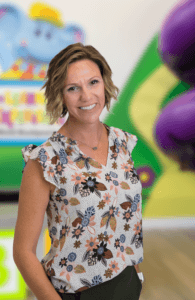 ABOUT THE AUTHOR
Caroline Gilbert, Ed.D., is an early childhood education expert and works closely with educators and families, embedding empathy and social learning into everyday classroom experiences alongside academics. She brings deep, hands-on expertise, with a doctorate in education leadership and experience spanning roles as a teacher, interventionist, and elementary school principal across pre-K through adult learning. She is currently the Academic Services Director at The Learning Experience, one of the country’s largest early childhood education providers with more than 400 centers serving children from six weeks to six years old.