The First-Time Parent’s Guide to Summer Daycare Lunches (That Won’t Spoil by Noon)
Sending your little one to daycare for their first summer is an exciting time. You want to pack a lunch that’s nutritious and appealing, but you may wonder how to stop food from spoiling in the heat. A summer lunch box for kids requires a bit more planning than winter packing. However, with a few simple strategies, you can send your child off with meals that are both delicious and safe.
The Science of Keeping Lunches Safe in Summer Heat
In a recent survey, when asked what they would love in a lunchbox, 93% of school kids suggested pizza, chips, or cookies. If your preschooler shares this dream menu, you’re in good company. The reality is that whatever makes it into the lunchbox, the priority is keeping it safe to eat.
Seasonal heat can make packed lunches unsafe when food is left between 40° Fahrenheit and 140° Fahrenheit, a range often called the “danger zone.” Within this range, harmful bacteria can multiply very fast. However imaginative your daycare or camp lunch ideas may be, temperature control is essential.
Think about how your groceries stay fresh from the store to your home. The food industry relies on a principle called cold chain management, passing food from one refrigerated setup to another. This minimizes bacteria that cause foodborne illnesses, and you can apply the same principles to your child’s lunch.
All you need is an insulated lunch bag and two ice packs. Keep perishables cold from your fridge to lunchtime, and you’ve created your own mini cold chain. This is the foundation that makes everything else work.
The Do’s and Don’ts of Summer Lunch Boxes for Kids
Here’s a quick reference for what to do and what to avoid.
| Do | Avoid |
| Use an insulated lunch bag | Paper bags for perishable foods |
| Pack two cold sources (ice packs or frozen water bottles) | Packing leftovers more than a day old |
| Pre-chill your thermos before adding cold foods | Leaving the lunch bag in direct sunlight |
| Wash the lunchbox daily with hot, soapy water | Reusing ice packs that haven’t fully refrozen |
| Pack perishable items directly between ice packs | Opening and closing the lunch bag repeatedly |
| Freeze juice boxes to serve as extra cold sources | Assuming room temperature foods are safe for hours |
These practices work together as a simple system. The insulated bag creates a protective barrier. The ice packs provide active cooling, and proper placement ensures even temperature distribution. When you follow these steps consistently, you build a reliable routine that takes the guesswork out of summer lunch packing.
Creating Delicious, Balanced Lunches on a Budget
Keeping the food safe is vital, but what you actually pack matters too. Data from the National Survey of Children’s Health for 2023 shows that while 67.4% of children ate a fruit daily, only 49.7% ate a vegetable daily. Summer camp lunches offer an ideal opportunity to introduce more fruits and vegetables in fun, appealing ways.
Budget considerations are also important. In some places, healthy packed lunches can be up to 45% more expensive than less healthy options. Even the best-planned lunches sometimes come home partially uneaten, wasting both food and money.
Strategic planning helps you balance nutrition, appeal, and cost. For healthy, budget-friendly lunches your youngster is more likely to eat, you can:
- Buy seasonal produce: Berries in summer and apples in fall cost less and taste better. A pint of strawberries in June is a lot less expensive than it would be in January.
- Prep once for the week: Wash grapes, slice vegetables, and portion snacks on Sunday to save time each day.
- Use what you have: Transform dinner leftovers into lunch components, such as pasta salad or quesadilla triangles. Last night’s grilled chicken becomes today’s chicken and cheese roll-ups.
- Employ a little helper: If your preschooler helps prepare or pack the lunch, they will feel more ownership and be more likely to enjoy eating it.
- Let them choose: Involve your child in selecting between two healthy options, so they feel excited about eating what’s packed.
- Start small with new foods: Include one familiar favorite alongside a new fruit or vegetable to reduce waste. Pair a tried-and-true cheese stick with sliced bell peppers they haven’t tried before.
- Shop your pantry first: Crackers, nut-free spreads, and shelf-stable items you already own can anchor budget-friendly lunches.
No-Stress Camp Lunch Ideas That Won’t Spoil
Whether your little one is going to daycare or camp, these ideas are appealing, safe to eat when cool, budget-friendly, and require minimal prep.
No-Cook Creations
Young children often prefer foods they can eat with their hands. These assembly-only options require no heat:
- Hummus with cucumber rounds and bell pepper strips
- Cheese cubes with whole wheat crackers
- Sunflower seed butter roll-ups with banana slices
- Turkey and cheese pinwheels
- Mini bagels with cream cheese
- String cheese with grapes
Smart Bento Box Combos
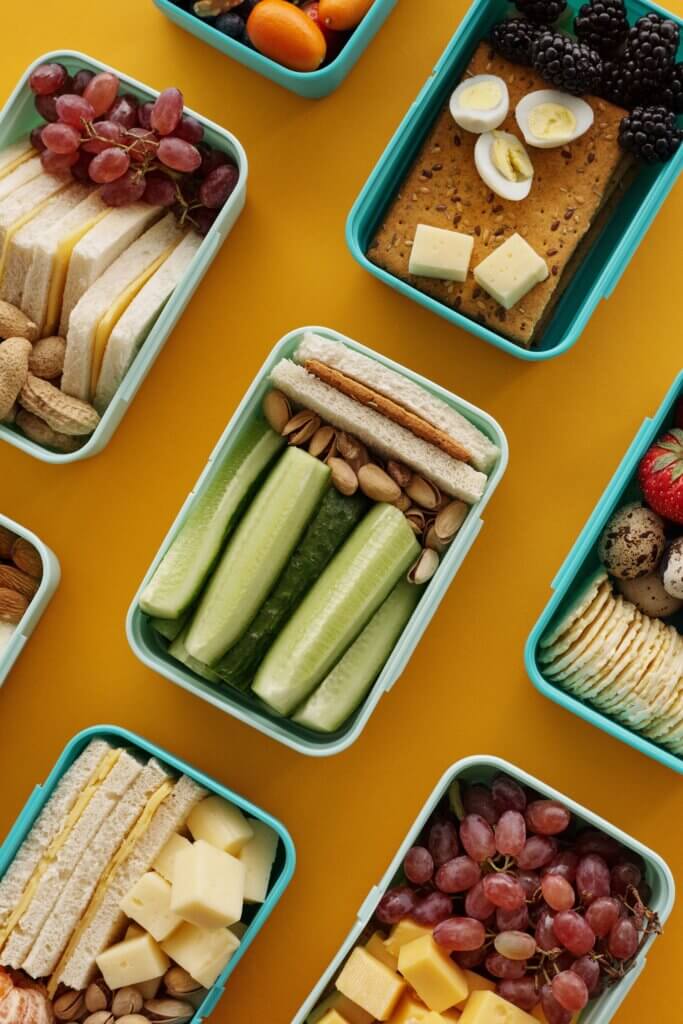
Preschoolers love variety and assembling their own bites. A summer lunch box for kids works perfectly in bento-style compartments that keep foods separate and visually appealing. You could try:
- Hard-boiled egg, cherry tomatoes, and whole-grain pretzels
- Diced watermelon, mozzarella pearls, and whole wheat pita triangles
- Sliced strawberries, cheddar cubes, and mini rice cakes
- Blueberries, turkey roll-ups, and snap peas
- Cantaloupe chunks, cottage cheese, and graham crackers
Thermos-Friendly Foods
A pre-chilled thermos keeps cold foods cold for hours. Fill it with ice water, let it sit for five minutes, empty it, and add your chilled food:
- Yogurt parfaits with granola kept separate
- Pasta salad with vegetables
- Chilled fruit salad
- Cottage cheese with berries
- Cold noodles with sesame dressing
Frequently Asked Questions About Summer Daycare Lunches
Here are answers to common questions first-time parents ask.
How can you be sure your child’s lunch is staying cold enough?
Pack two ice packs and place perishable items directly between them. An insulated lunch bag keeps the cold in. If it will be stored for more than a few hours before eating, add a third ice pack or a frozen water bottle.
What’s the best kind of lunchbox for summer?
Choose an insulated soft-sided lunch bag rather than a plastic lunchbox. Insulated bags maintain temperature better and fit ice packs more snugly around the food. Look for bags with thick insulation and a tight seal.
How long can a packed lunch safely sit before a child eats it?
With two ice packs in an insulated bag, perishable foods stay safe for several hours. Most daycare and summer camp lunches fall within this window. If food will be stored longer or in a warm environment, add an extra ice pack or choose items that don’t require refrigeration.
What if your child’s daycare doesn’t have refrigeration?
With the insulated bag and ice pack system, your little one’s lunch creates its own cold storage that doesn’t rely on daycare facilities. Pack at least two ice packs and consider adding a frozen water bottle as a third cold source for extra protection.
What drinks should you pack?
Frozen juice boxes are perfect for summer lunches. Freeze them overnight and pack them alongside the food. They act as an extra ice pack while frozen and thaw into a cool, slushy drink by lunchtime. Water bottles can also be partially frozen to serve the same dual purpose.
Pack Lunch with Confidence All Summer Long
Understanding why heat affects food safety and having a simple system for keeping lunches cold takes the stress out of daily packing. Summer lunch box for kids can be nutritious, appealing, and safe with just a few smart strategies. Enjoy this exciting new phase with your youngster and know that you are giving them a fantastic lunch to fuel their adventures.
ABOUT THE AUTHOR
Beth Rush is the Managing Editor of Body+Mind.
RELATED ARTICLES
- Why the Advice You’re Getting About Picky Eating Is Probably Wrong
- Potty Training & Daycare
- 5 Foods That Expire Quickly, and Your Child Probably Eats
Cover image by Vanessa Loring