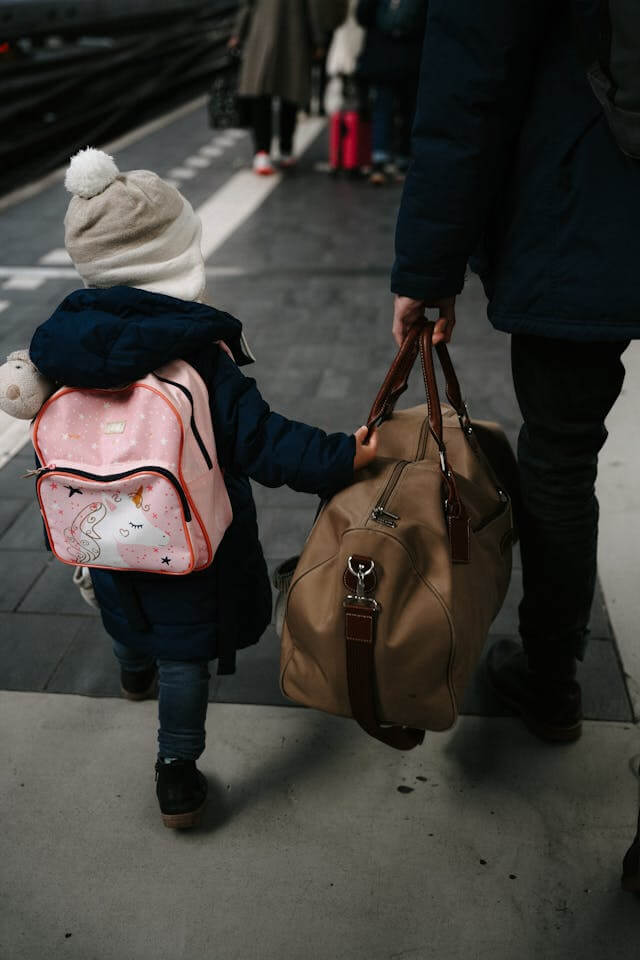
Travel, holidays, and family gatherings can be exciting—but also overwhelming—for young neurodivergent children. Loud environments, unfamiliar faces, and shifting routines can create sensory and emotional overload. With some planning and compassion, these experiences can become empowering rather than stressful.
Preview What’s Coming. Predictability helps children feel safe. Before traveling or attending an event, explain what will happen step-by-step.
- Use visual supports: Create a simple picture schedule (e.g., “home → car → Grandma’s → snack → home”). The Autism Speaks Visual Supports Toolkit offers printable templates and ideas (autismspeaks.org/tool-kit/visual-supports).
- Try social stories: These short, illustrated stories show what your child can expect in a new situation. Learn how to write your own at the National Autistic Society (autism.org.uk/advice-and-guidance/topics/communication/social-stories).
- Rehearse transitions: A “pretend airport” at home or short car practice trips can help your child anticipate new experiences in a familiar space.
Prepare the Senses and the Body. Neurodivergent children often process sensory input differently.
- Pack a comfort kit: Include noise-canceling headphones, sunglasses, chewy snacks, or a soft comfort item. Occupational therapists recommend “sensory diets”—planned sensory activities—to help kids self-regulate (STAR Institute).
- Stick to routines where possible: Try to keep nap and meal times predictable. If that’s not possible, prepare your child with gentle countdowns or a travel-day version of the usual routine (like reading the same bedtime story in a hotel).
- Preview new environments: Show photos or short videos of the destination so it feels familiar before arrival.
Empower with Choices. When kids have a say, they feel safer.
- Offer two clear options—“blue pajamas or red ones?”—to give a sense of control.
- Create a simple choice board (pictures of snacks, toys, or games) so your child can point rather than verbalize decisions.
- If your child uses alternative communication, bring their device or visual cards.
Consistency in communication tools reduces frustration during transitions (Autism Society Communication Resources).
Anchor to Familiarity. Familiar rituals signal safety even in new settings.
- Bring a favorite blanket, book, or bedtime song.
- Use the same phrases to start and end daily routines (“Time to brush teeth!” “All done, lights out”). These cues remind your child that although the environment is different, the structure of the day is the same.
- Small rituals—like a morning cuddle or bedtime story—help regulate emotions by engaging predictable patterns in the brain (Harvard Center on the Developing Child).
Plan for Downtime and Exits. Even the best-prepared child may need a break.
- Build extra time into travel schedules. Avoid back-to-back events.
- Identify a quiet “safe space” at gatherings—a corner with dim lighting or a separate room—where your child can decompress.
- Use a calm-down cue such as deep breathing, soft music, or a sensory toy.
- Give yourself grace: it’s okay to leave early or skip activities if your child becomes overstimulated.
Reflect and Celebrate. After the trip or event, help your child process the experience.
- Look at photos together and name feelings: “You smiled on the plane!” or “That music was loud; you covered your ears to help.”
- Celebrate their effort—“You tried something new!”—to reinforce self-confidence.
- A simple debrief strengthens resilience and prepares them for next time.
Final Thoughts
Change is hard for all young children, but for neurodivergent ones, predictability, sensory awareness, and communication support are key. By previewing events, honoring your child’s needs, and allowing rest and recovery, you teach flexibility in a world that often feels unpredictable.
For more guidance:
- Download Beven’s Neurodivergent Travel & Holiday Support Sheet (PDF)
- Autism Speaks Family Services Tool Kits
- CDC Learn the Signs. Act Early.
- Zero to Three: Supporting Neurodivergent Toddlers
Beven Byrnes is a mother of four and the Executive Director of Bridges Middle School, a pioneering program serving neurodivergent learners in Portland, Oregon. A veteran educator and advocate, she has led the school for 14 years, working to transform whole-school design, pedagogy, and culture to meet the needs of students with ADHD, autism, and related learning differences.
RELATED ARTICLES
- Learning And Child Development: The Early Years
- 3 Ways to Promote Your Child’s Learning
- What Your Nanny Wishes You Knew
RELATED PODCAST
Cover photo by Mathias Reding